
-
Send us a mail [email protected]
-
Call us anytime +91-9999884400
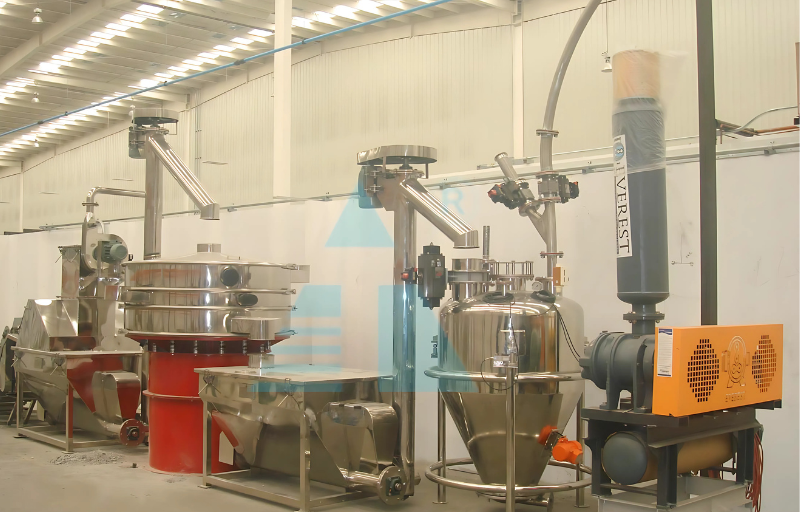
A Flour Automation System is a combination of intelligent hardware, PLC programming, SCADA software, sensors, industrial controllers, VFDs, HMIs, and automated control panels that manage and monitor the complete flour production process with minimal human intervention.
Instead of manually operating each machine, automation allows every stage of production to communicate intelligently, ensuring smooth and uninterrupted operations.
A modern Flour Automation System controls:
• Wheat receiving
• Cleaning section
• Destoning process
• Dampening
• Storage silos
• Roller mills
• Plansifters
• Purifiers
• Pneumatic conveying
• Flour blending
• Packing machines
• Material handling
• Production monitoring
• Energy management
• Alarm systems
• Data logging
• Remote monitoring
The result is a fully synchronized production process that delivers consistent flour quality while maximizing operational efficiency.
Nepal's flour industry has witnessed rapid growth due to increasing demand for packaged flour products, improved food processing standards, and expanding commercial bakeries.
However, many flour mills still face challenges such as:
• Manual production errors
• High labour costs
• Inconsistent flour quality
• Frequent machine downtime
• Poor production tracking
• Higher electricity consumption
• Material wastage
• Difficulty in maintaining production records
A Flour Automation System eliminates these operational challenges by introducing intelligent process control.
With automation, flour manufacturers can:
• Increase production capacity
• Improve product consistency
• Reduce operational expenses
• Monitor every machine in real time
• Detect faults instantly
• Improve plant safety
• Increase overall profitability
For flour manufacturers in Nepal, automation provides a competitive advantage by enabling faster production while meeting modern quality expectations.
An automated flour mill consists of multiple intelligent systems working together seamlessly.
The process begins with receiving wheat from suppliers.
Automation monitors:
• Material quantity
• Conveyor operation
• Elevator movement
• Silo filling
• Storage levels
Level sensors automatically stop conveyors when silos become full, preventing overflow and reducing material loss.
Before milling begins, wheat passes through several cleaning machines.
Automation controls:
• Magnetic separators
• Destoners
• Vibro separators
• Aspirators
• Scourers
Sensors continuously monitor machine performance and alert operators if abnormalities occur.
Maintaining proper moisture content is critical for producing high-quality flour.
Automation precisely controls:
• Water dosing
• Mixing
• Resting time
• Moisture percentage
This ensures consistent grain conditioning before milling.
The milling section is the heart of every flour plant.
Automation controls:
• Roller mills
• Feed rates
• Grinding pressure
• Speed control
• Product flow
• Motor synchronization
Using PLC-based automation, every milling machine operates in perfect coordination.
Automation manages:
• Air pressure
• Airlocks
• Cyclones
• Blowers
• Diverter valves
This ensures uninterrupted material transportation throughout the plant.
Different flour grades require accurate blending.
Automation controls:
• Ingredient ratios
• Flow rates
• Mixing time
• Batch accuracy
The system guarantees uniform flour quality every time.
Packaging automation includes:
• Weighing systems
• Bag filling
• Stitching machines
• Bag conveyors
• Batch coding
The system reduces packaging errors while increasing production speed.
A complete Flour Automation System includes several advanced industrial automation components.
The PLC acts as the brain of the entire automation system.
It performs:
• Machine sequencing
• Motor control
• Interlocking
• Safety logic
• Process control
PLC automation improves reliability and reduces downtime.
SCADA (Supervisory Control and Data Acquisition) provides operators with a complete overview of the plant.
Operators can:
• Monitor every machine
• View production reports
• Receive alarms
• Analyse production trends
• Generate reports
• Access historical data
SCADA also supports remote monitoring, allowing plant managers to supervise operations from anywhere.
HMI touch panels enable operators to:
• Start machines
• Stop machines
• Change production settings
• Monitor equipment
• View alarms
• Control production recipes
A user-friendly interface simplifies plant operation and reduces operator training time.
VFDs control motor speed according to production requirements.
Benefits include:
• Lower electricity consumption
• Smooth motor operation
• Reduced mechanical wear
• Improved production control
• Longer equipment lifespan
Automation relies on sensors for accurate data collection.
Common sensors include:
• Level sensors
• Temperature sensors
• Pressure sensors
• Flow sensors
• Speed sensors
• Vibration sensors
• Load cells
• Proximity sensors
These devices provide real-time information that helps maintain efficient operations.
Industrial control panels integrate all automation components.
They include:
• PLC panels
• MCC panels
• PCC panels
• Drive panels
• Instrument panels
• Communication modules
Properly designed control panels improve safety and simplify maintenance.
Implementing a Flour Automation System offers measurable advantages for flour manufacturers.
Automation synchronizes all machines, reducing delays and improving overall production capacity.
Automated process control ensures every production batch meets the same quality standards.
Automation minimizes manual intervention, allowing fewer operators to manage larger production volumes.
Optimized machine operation reduces:
• Electricity usage
• Material wastage
• Maintenance costs
• Downtime
Every production batch can be tracked using digital records.
Manufacturers can monitor:
• Production history
• Raw material usage
• Machine performance
• Product quality
Automation incorporates:
• Emergency shutdown systems
• Motor protection
• Alarm notifications
• Fault diagnostics
• Safety interlocks
This helps create a safer working environment.
Times Automation is a trusted industrial automation company providing advanced Flour Automation Systems for modern flour mills. We deliver customised automation solutions that improve productivity, product quality, and operational efficiency for businesses across India and neighbouring markets, including Nepal.
Our solutions are built using globally recognised PLCs, HMIs, SCADA platforms, VFDs, and industrial control technologies. Every system is engineered to match the specific requirements of each flour mill, whether it is a new installation or an upgrade of an existing plant.
By focusing on reliability, energy efficiency, and intelligent process control, Times Automation helps flour manufacturers reduce downtime, optimise production, and move towards smarter, data-driven operations.
The flour milling industry in Nepal is evolving rapidly. Consumer demand for high-quality wheat flour, atta, maida, sooji, and specialty flour products continues to grow as bakeries, food processing industries, hotels, restaurants, and retail chains expand across the country.
To remain competitive, flour mills require reliable automation solutions that improve efficiency, reduce operating costs, and ensure consistent product quality. Times Automation provides intelligent Flour Automation Systems designed to meet these modern production requirements.
Our automation solutions are suitable for:
• Wheat Flour Mills
• Roller Flour Mills
• Atta Plants
• Maida Production Plants
• Suji Manufacturing Units
• Multi-Grain Flour Processing Plants
• Corn Flour Plants
• Besan Plants
• Food Processing Industries
• Grain Handling Plants
Whether your facility is located in Kathmandu, Biratnagar, Pokhara, Birgunj, Nepalgunj, Butwal, Bharatpur, Janakpur, Hetauda, or any other industrial region of Nepal, Times Automation delivers scalable automation solutions tailored to your production goals.
A modern Flour Automation System integrates multiple industrial technologies into one intelligent control platform.
The first level includes all sensors and field devices responsible for collecting real-time production data.
Examples include:
• Level Sensors
• Temperature Sensors
• Pressure Transmitters
• Flow Meters
• Weighing Systems
• Load Cells
• Speed Sensors
• Proximity Sensors
• Motor Feedback Devices
These components continuously send accurate information to the PLC.
The PLC acts as the central controller.
Its responsibilities include:
• Machine sequencing
• Conveyor synchronization
• Motor control
• Production logic
• Alarm management
• Interlocking
• Emergency shutdown
• Recipe management
This ensures every process operates in the correct sequence.
Industrial HMI panels allow operators to:
• Start production
• Stop production
• Change recipes
• Monitor production
• View machine status
• Check alarms
• Reset faults
The user-friendly interface reduces operator training time.
SCADA software provides complete plant visualization.
Plant managers can:
• Monitor every production line
• Generate production reports
• Track machine efficiency
• Analyse downtime
• View historical trends
• Monitor utility consumption
• Export production data
Real-time monitoring helps management make faster operational decisions.
Today's flour industry is moving towards smart manufacturing.
Times Automation develops Industry 4.0-compatible automation systems that support digital manufacturing.
Features include:
• Cloud Monitoring
• Remote Plant Access
• Production Analytics
• Smart Dashboards
• Automated Reporting
• Predictive Maintenance
• IoT Connectivity
• Data Logging
• Mobile Monitoring
• Performance Analysis
This allows business owners to monitor production even while travelling.
Internet of Things (IoT) technology enables every machine to communicate intelligently.
IoT benefits include:
• Remote machine monitoring
• Live production data
• Real-time machine health
• Instant fault notifications
• Energy monitoring
• Production efficiency reports
• Maintenance scheduling
Instead of waiting for machine failure, maintenance teams receive early alerts.
Electricity represents one of the largest operational expenses in flour milling.
A professionally designed Flour Automation System helps reduce energy consumption through:
Motors operate only when required.
This eliminates unnecessary electricity usage.
VFDs optimise motor speed based on production demand.
Benefits include:
• Lower power consumption
• Smooth starting
• Reduced current spikes
• Longer motor life
Idle machines automatically stop after predefined intervals.
This prevents unnecessary power loss.
Automation distributes electrical loads efficiently throughout the plant.
Benefits include:
• Stable production
• Lower utility costs
• Reduced equipment stress
One major advantage of automation is automatic report generation.
Reports include:
• Daily Production
• Hourly Production
• Shift Reports
• Machine Running Hours
• Downtime Reports
• Batch Reports
• Alarm History
• Electricity Consumption
• Raw Material Usage
• Finished Product Quantity
These reports improve production planning and inventory management.
Maintaining consistent flour quality is essential for customer satisfaction.
Automation helps control:
• Moisture
• Particle Size
• Grinding Quality
• Blending Accuracy
• Product Uniformity
• Packaging Weight
• Batch Consistency
Every production batch meets predefined quality standards.
Unexpected machine breakdowns lead to costly production losses.
Automation supports preventive maintenance by monitoring:
• Motor running hours
• Bearing temperature
• Machine vibration
• Lubrication schedules
• Equipment performance
• Component wear
Maintenance teams receive alerts before major failures occur.
Industrial safety is an essential part of every automation project.
Times Automation incorporates multiple safety functions.
These include:
• Emergency Stop Systems
• Motor Protection
• Short Circuit Protection
• Overload Protection
• Alarm Management
• Fire Safety Integration
• Automatic Shutdown
• Safety Interlocks
• Phase Monitoring
• Voltage Protection
These features protect both personnel and equipment.
Automation can be implemented in various grain processing industries.
Applications include:
• Wheat Flour Plants
• Roller Flour Mills
• Atta Chakki Plants
• Corn Flour Plants
• Besan Manufacturing
• Rice Milling Plants
• Feed Processing Plants
• Grain Storage Facilities
• Food Processing Plants
• Agro Processing Industries
Times Automation focuses on delivering complete automation solutions rather than just supplying control panels or software.
Our strengths include:
• Customised automation solutions
• Experienced automation engineers
• PLC programming expertise
• SCADA development
• HMI design
• Electrical panel manufacturing
• Site installation support
• Commissioning services
• Operator training
• Technical assistance
• Upgrade solutions for existing flour mills
• Energy-efficient automation systems
Our goal is to help flour manufacturers improve productivity, minimise downtime, and achieve long-term operational reliability.
As Nepal's flour milling industry continues to modernise, investing in a reliable Flour Automation System has become an effective way to improve productivity, maintain consistent product quality, optimise energy usage, and reduce operating costs. From raw material handling and milling to blending, packaging, and real-time monitoring, automation creates a more efficient and data-driven production environment.
Times Automation delivers customised PLC, SCADA, HMI, VFD, and industrial control solutions that help flour manufacturers transition to smarter operations. Whether you are planning a new flour mill or upgrading an existing facility, our engineering expertise and scalable automation systems can support your business growth and long-term operational performance.
FAQs
1. What is a Flour Automation System?
A Flour Automation System is an advanced industrial control solution that automates the entire flour milling process using PLC, SCADA, HMI, VFDs, and sensors. It helps flour mills improve production efficiency, maintain consistent flour quality, reduce manual labour, and monitor operations in real time. Times Automation provides customised Flour Automation Systems for modern flour mills in India and Nepal.
2. What are the benefits of installing a Flour Automation System?
A Flour Automation System offers numerous advantages, including increased production capacity, consistent product quality, reduced downtime, lower energy consumption, real-time process monitoring, improved plant safety, and reduced operational costs. It also minimises human error and provides detailed production reports for better decision-making.
3. How does PLC and SCADA improve flour mill operations?
PLC (Programmable Logic Controller) automates machine sequencing and process control, while SCADA (Supervisory Control and Data Acquisition) provides real-time monitoring, production reporting, alarm management, and remote access. Together, they help flour mills achieve higher productivity, better quality control, and efficient plant management.
4. Can an existing flour mill be upgraded with automation?
Yes. Existing flour mills can be upgraded with a Flour Automation System without replacing the entire plant. Times Automation integrates PLCs, SCADA, HMIs, VFDs, sensors, and control panels into existing machinery, improving efficiency, reducing maintenance costs, and extending equipment life.
5. Why is a Flour Automation System important for flour mills in Nepal?
Flour manufacturers in Nepal face increasing demand for high-quality flour while managing rising labour and energy costs. A Flour Automation System helps optimise production, improve product consistency, reduce electricity consumption, and ensure reliable plant performance, making it a valuable investment for Nepal's growing flour industry.
6. Which industries can benefit from Flour Automation Systems?
Flour Automation Systems are widely used in wheat flour mills, atta plants, maida manufacturing units, sooji plants, corn flour processing facilities, besan plants, grain handling systems, food processing industries, and other agro-based manufacturing units requiring precise process control.
7. How does automation reduce energy consumption in a flour mill?
Automation reduces energy consumption by using Variable Frequency Drives (VFDs), intelligent motor control, automatic equipment shutdown, load management, and optimised production scheduling. These features lower electricity costs while maintaining efficient plant operation.
8. What technologies are used in a modern Flour Automation System?
A modern Flour Automation System includes PLC controllers, SCADA software, Human Machine Interface (HMI) panels, Variable Frequency Drives (VFDs), industrial sensors, electrical control panels, communication networks, IoT connectivity, and automated reporting systems for complete plant control.
9. Why should I choose Times Automation for Flour Automation Systems?
Times Automation offers customised Flour Automation Systems designed to improve productivity, quality, and operational efficiency. Our solutions include PLC programming, SCADA development, HMI design, electrical control panels, installation, commissioning, and technical support for flour mills across India and neighbouring countries, including Nepal.
10. How can a Flour Automation System increase profitability?
A Flour Automation System increases profitability by reducing production losses, minimising downtime, lowering labour and energy costs, improving flour quality, increasing production capacity, and providing real-time production data for better operational decisions. These benefits help flour manufacturers achieve higher efficiency and long-term business growth.